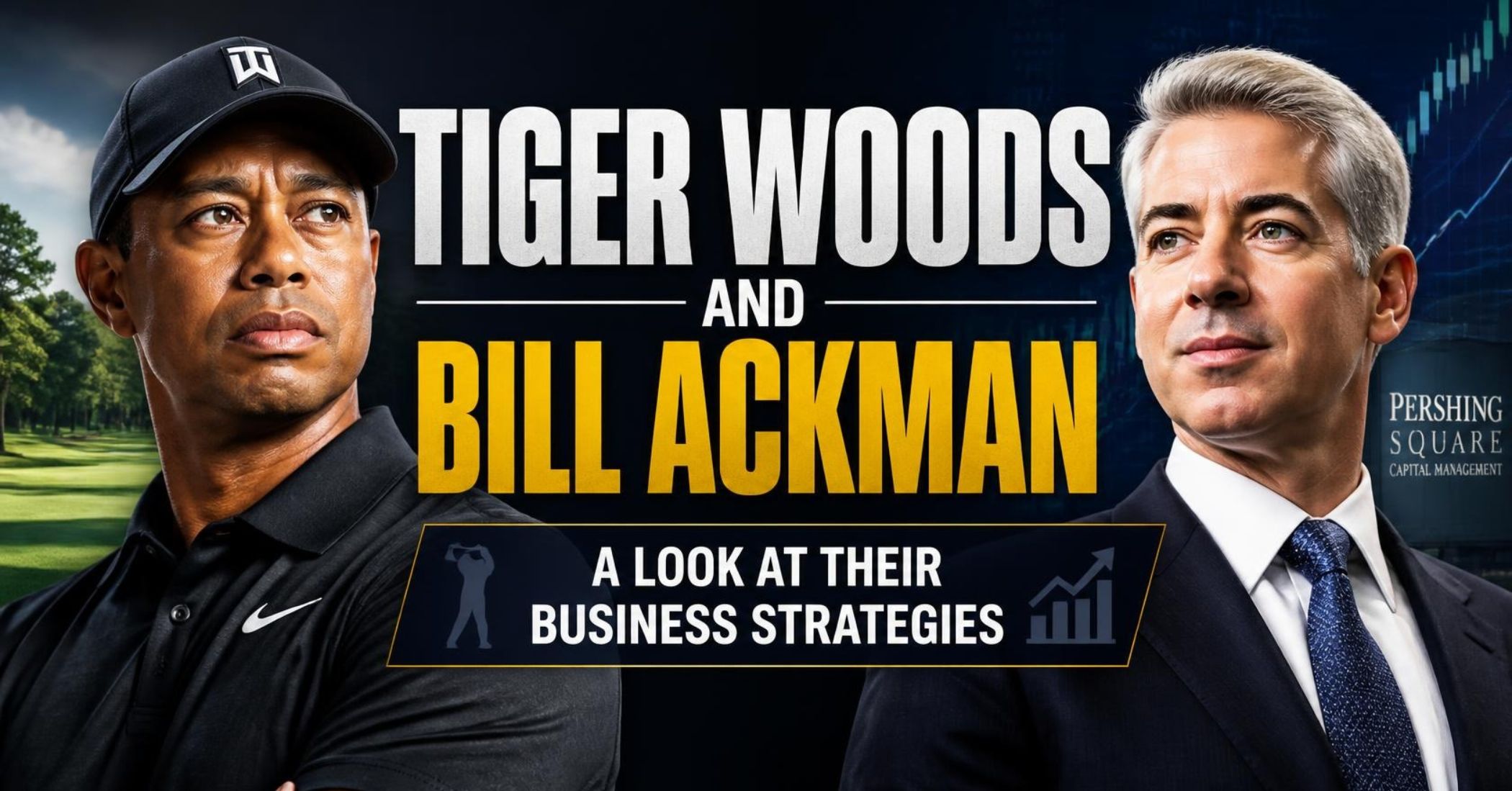
Tiger Woods and Bill Ackman rarely appear in the same sentence, yet both have turned personal expertise into lasting business influence. Woods built a global brand from golf, while Ackman built Pershing Square Capital Management through activist investing. According to public reports, each relies on reputation, a clear strategy, and a trusted team.
This article compares how tiger woods and bill ackman structure their work, manage risk, and scale their reach. It also connects their careers to modern cloud architecture, covering growth, security, and cost control. By the end, you will see what a sports business can borrow from an investment firm.
Who Are Tiger Woods and Bill Ackman?
Tiger Woods is an American professional golfer with 15 major championships and 82 PGA Tour wins, a total that ties the all-time record. His 2019 Masters victory is widely seen as one of sport’s great comebacks. According to Forbes, his lifetime earnings made him the first athlete to reach billionaire status.
Bill Ackman is an American investor and the founder of Pershing Square Capital Management. He launched the firm in 2004 and is known for activist investing, where an investor takes a large stake and pushes for change. Additionally, he is a Harvard graduate who often shares his views publicly.
Tiger Woods: From Athlete to Business Ecosystem
Woods did not stop at winning tournaments. Through TGR Ventures, he expanded into golf course design, live events, and hospitality. The group also includes the TGR Foundation, which focuses on education programs for students.
His apparel line, Sun Day Red, launched in 2024 with TaylorMade after his long Nike partnership ended. Meanwhile, ventures like PopStroke, a putting-based entertainment concept, show a push toward everyday fans, not only elite players. Together, these pieces form a connected ecosystem built around one trusted name.
Bill Ackman: Investment Strategy as a Business Architecture
Ackman runs concentrated portfolios. Instead of owning hundreds of stocks, Pershing Square typically holds a small number of large positions. Public reports link the firm to companies such as Canadian Pacific, Chipotle, and Hilton.
His approach rests on research, public argument, and patience. However, it carries real risk. His well-known short bet against Herbalife drew years of scrutiny. By contrast, his 2020 credit-protection trade, which public reports say earned about $2.6 billion, showed how timing and preparation can pay off.
Tiger Woods and Bill Ackman: A Useful Business Comparison
The comparison works best through structure, not fame. Woods grows by adding business lines around a central brand. Ackman grows by concentrating capital on a few ideas he can influence. Both depend heavily on reputation.
Additionally, each faces “key person” risk. If Woods steps back from golf, his brand must lean more on partners and products. If Ackman’s judgment falters, investor confidence can shift quickly. Understanding this shared weakness explains why both men invest in teams and long-term platforms.
What Their Careers Teach Us About Cloud Architecture
Think of a business as a system. Woods resembles a platform with many connected services. Ackman resembles a lean system with few components, each doing heavy work. Cloud engineers face the same design choice every day: broad and modular, or focused and tightly controlled.
Moreover, both models need clear data flow. Fans, sponsors, investors, and partners all generate information. A sound cloud setup keeps that information organized, searchable, and available when decisions must be made quickly.
Scalability: Building for Growth Without Rebuilding Everything
Woods’ brand shows how a core asset can support new products without starting over. A golf following became a base for apparel, design, and entertainment. In cloud terms, this is modular design, where new services plug into an existing foundation.
Meanwhile, Pershing Square shows scaling through capital rather than headcount. Cloud tools that scale automatically, such as elastic compute, work the same way. Resources rise during busy periods, like a major tournament weekend, and fall afterward.
Security and Risk Management
Both men manage reputational and financial risk daily. Ackman’s firm hedges against market shocks. Woods’ team protects image rights, sponsor agreements, and personal data. Security in the cloud follows the same logic: assume something can go wrong and prepare before it does.
Practical steps include encryption, strict access controls, and regular audits. Additionally, sports organizations hold sensitive fan, ticketing, and payment data. A single breach can damage trust faster than any bad round of golf.
Cost Considerations and Operational Efficiency
Efficiency matters in both worlds. Ackman’s concentrated approach limits overhead by focusing attention on fewer positions. Woods’ partnership model, such as working with an established manufacturer, lets his brand avoid carrying every operational cost alone.
Cloud spending needs similar discipline. Pay-as-you-go pricing helps, but unused resources still add up. Therefore, teams should review usage monthly, tag costs by project, and shut down idle systems. Small habits often save more than large renegotiations.
Practical Use Cases for a Modern Sports Business
A modern sports business can apply these ideas in clear ways. Cloud analytics can track merchandise demand by region. Streaming platforms can handle sudden audience spikes during live events. Customer data tools can personalize offers for fans who attend, buy, or watch.
Additionally, investment-style thinking helps. Teams can rank projects by expected return, test small first, and expand only after results appear. This blends Woods’ brand-building mindset with Ackman’s disciplined approach to capital.
Future Trends: Sports, Finance, and Intelligent Digital Platforms
Sports and finance are drawing closer. Athletes increasingly launch funds, media companies, and consumer brands. Meanwhile, investment firms use data tools to study customer behavior and market shifts.
Artificial intelligence will likely accelerate both trends, from fan engagement to risk modeling. However, trust remains the deciding factor. Platforms that protect data, explain their methods, and deliver real value will earn lasting loyalty from fans and investors alike.
Frequently Asked Questions
What connects these two famous business figures?
Both turned personal expertise into large business influence. Woods used athletic success, while Ackman used investing skill. Each relies heavily on reputation, a focused strategy, and a trusted team.
What is Tiger Woods known for outside golf?
He is known for TGR Ventures, golf course design, the TGR Foundation, and the Sun Day Red apparel brand. He also has hospitality and entertainment interests.
What does Bill Ackman do professionally?
He is the founder and CEO of Pershing Square Capital Management, a hedge fund firm. He is known for activist investing and concentrated stock positions.
Are these two men business partners?
No public reports show a formal business partnership between them. They are compared as examples of two different business models.
How did Tiger Woods build his business influence?
He combined record-setting golf results with long-term endorsements and later his own ventures. Consistent public visibility strengthened that foundation.
How did Bill Ackman build his professional reputation?
He built it through high-profile investments, public presentations, and bold market positions. Both successes and setbacks have kept him in the spotlight.
Why are these two professionals compared?
They show how different industries can produce similar lessons about brand, risk, and scale. The comparison helps business readers see strategy beyond a single field.
Final Thoughts
The story of tiger woods and bill ackman shows that lasting influence comes from structure, not only talent. Woods built a connected ecosystem around his name. Ackman built a focused investment platform around deep research and conviction.
For modern businesses, the lesson is practical. Design for growth, protect what you build, and watch costs closely. Whether in sports or finance, the principles behind tiger woods and bill ackman apply equally to digital systems: stay flexible, manage risk early, and keep trust at the center.

Nolan Dean is a content writer and pop culture researcher specializing in biographies, and entertainment news. With years of experience creating fact-based, reader-focused content, he delivers accurate profiles backed by credible research and trusted sources.